


Buying or selling used Warhammer miniatures can be a gamble. What is a half-painted army actually worth? Is that eBay listing a bargain, or are you paying too much for someone else’s abandoned project? Miniswap.gg is a marketplace for miniatures that wants to take the guesswork out of the second-hand market with historical price data for Warhammer and other tabletop systems. Here is how.
This post was kindly sponsored by Miniswap. Thoughts and opinions are theirs, not ours, though we have reviewed the content (and their website) to ensure it meets our editorial quality standards.
Anyone who has bought used Warhammer online has probably been there before. You find something on eBay or Facebook Marketplace, check a few old listings, try to work out what it’s worth, and eventually make a guess. Sometimes you get a bargain. Sometimes you realise afterwards that you probably paid too much for someone else’s half-finished Space Marines.
Selling is not much easier. If you want to get a fair price for an old army, you’re usually left comparing a handful of completed eBay auctions and hoping they are actually comparable to what you’re selling. The used miniature market has always involved a fair amount of guesswork.
Prices can change depending on the current meta, availability, or whether a kit has recently gone out of production. On top of that, condition makes a huge difference, but it’s often difficult to find enough comparable listings to get a clear picture. Miniswap.gg is trying to make that process more transparent with a historical price tracker for Warhammer 40,000, Age of Sigmar, and several other tabletop systems, based on the catalogue it has been building over the past year.
Miniswap: a properly organised price tracker
For a price tracker to be useful, the underlying listings need to be organised properly. That was the starting point for Miniswap. Rather than scrolling through a long feed of loosely categorised listings, you can filter by game system, faction, unit, and condition.
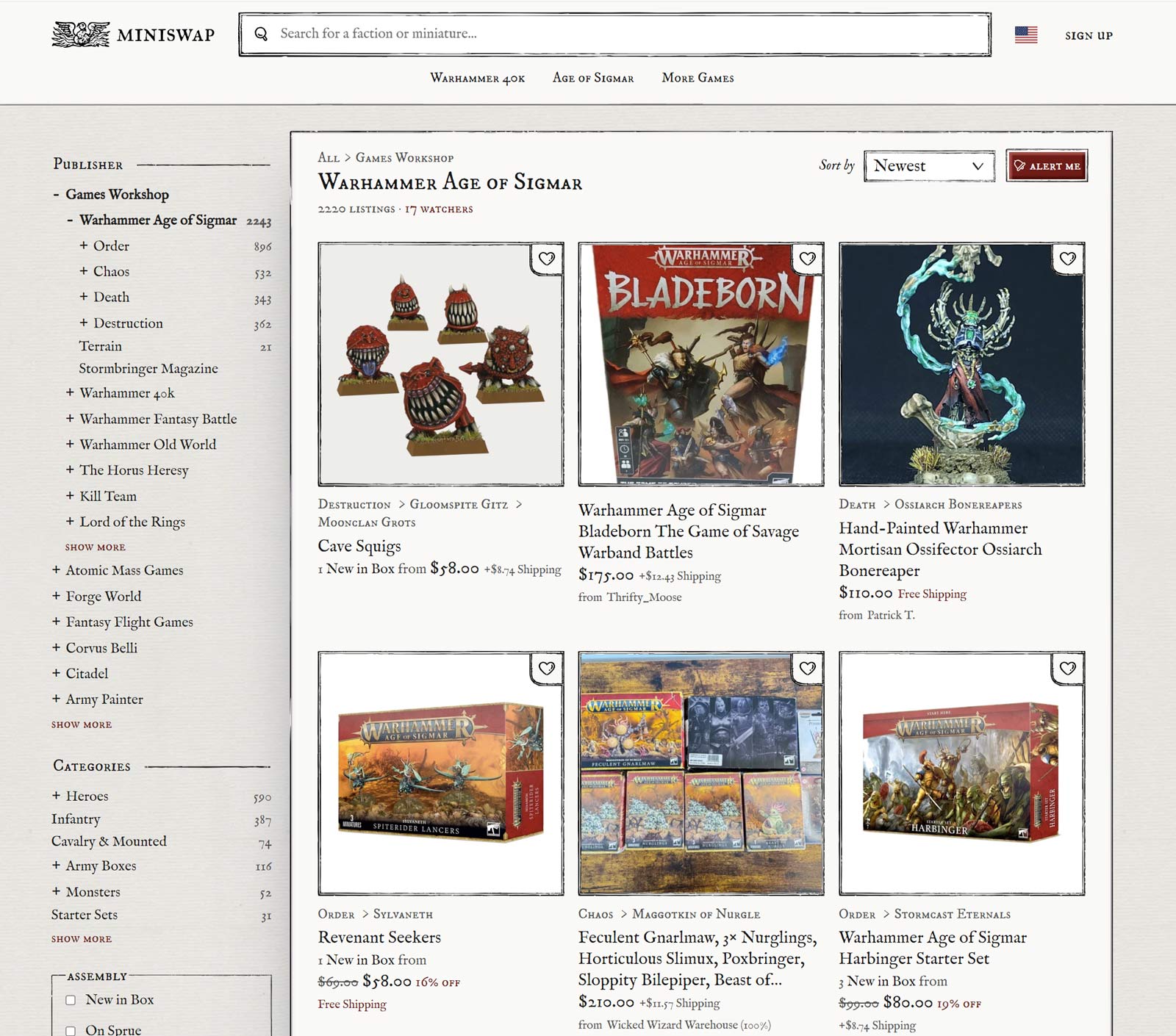
This structure is what actually makes the pricing useful. Matching a specific kit to a specific condition lets you compare similar listings instead of squinting at a blurry photo and guessing. You can also pull up price history straight from the normal search bar: search for a kit, then click over to the Products tab in the results.
A sealed box and a half-painted squad are not the same thing
One of the more useful aspects of the tracker is that it separates sales into four different conditions: new in box, on sprue, partly painted, and painted.
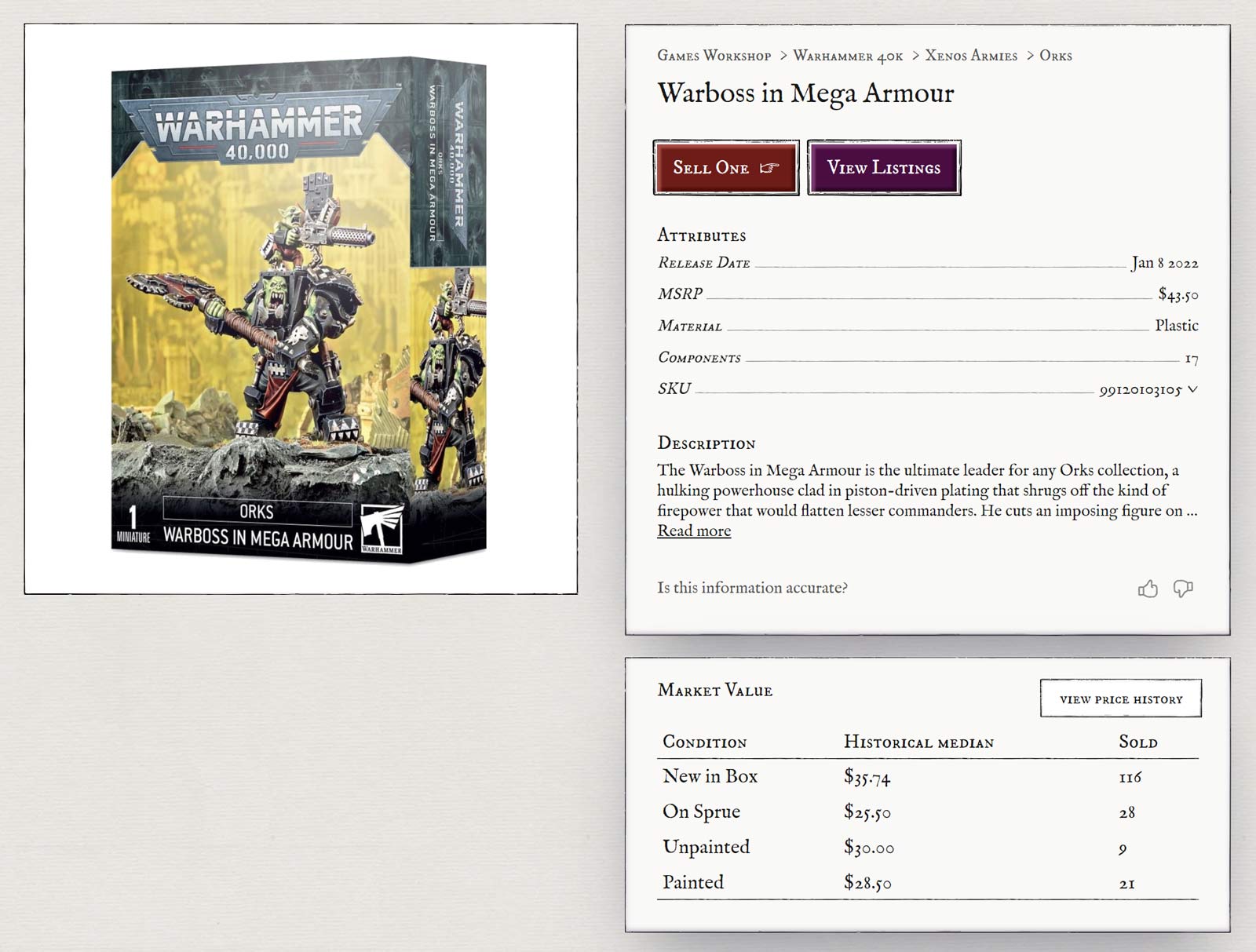
That might sound obvious, but condition is one of the biggest variables in the second-hand miniature market. A sealed Combat Patrol and a squad covered in old paint and superglue are technically the same product, but obviously not worth the same amount. Half-painted models can be particularly difficult to value. Sometimes the previous owner has done most of the work for you. Most of the time, you’re buying an evening of stripping paint.
Being able to see how prices differ between conditions should make it easier to get a rough idea of what something is actually selling for, whether you’re buying or selling.
The new-in-box data can also be useful. GW holds retailers to a fairly strict Minimum Advertised Price policy, so new kits mostly sell somewhere between MAP and full RRP. The tracker can give you an idea of which products regularly sell closer to the lower end of that range. Given the current price of many Warhammer kits, and another round of price increases in 2026, that kind of information certainly doesn’t hurt.
Less guesswork for buyers, sellers, and stores
Buyers can check whether a price is actually reasonable before jumping on a listing out of FOMO. Sellers can get a better idea of what their models are realistically worth instead of picking a number, hoping for the best and watching it sit for months. Stores and high-volume sellers can base buy-back offers on real numbers instead of just picking something at the counter.
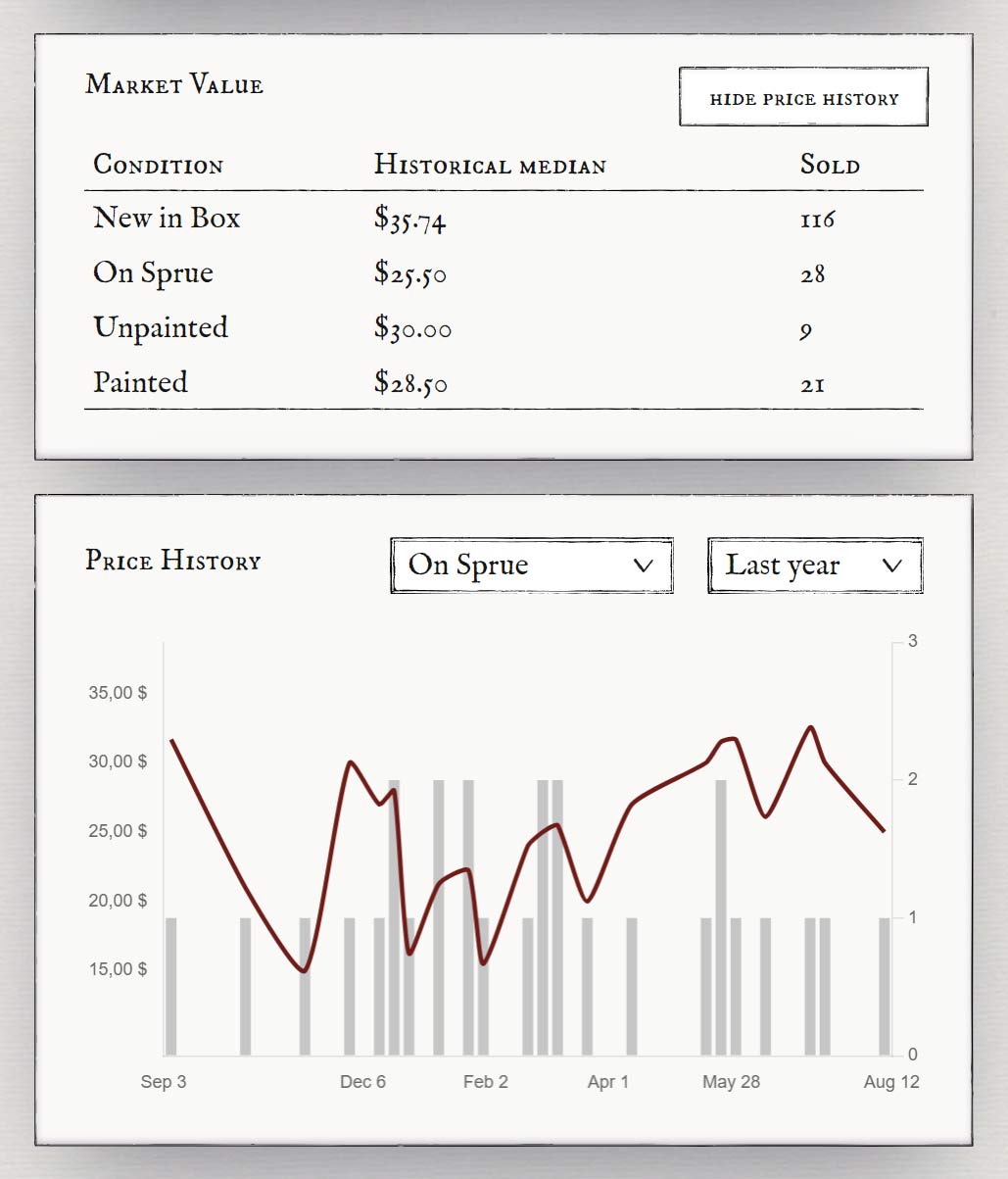
It could also be useful for stores and people selling large volumes of miniatures. Buy-back prices are often difficult to calculate, especially when dealing with painted armies or older collections. Having historical sales data available could at least provide a more solid starting point than simply making an estimate at the counter.
It’s something card games have had for years
Miniswap’s idea itself isn’t new. Trading card games have had price tracking tools for a long time. If you look up a Magic: The Gathering card on a site like TCGplayer or Manapool, you can see how its price has changed over time and compare different conditions or versions.
Miniatures have never really had an equivalent, despite there being a sizeable second-hand market and how often armies get bought, sold, and bought again.
Now also launching in Germany
Miniswap is currently available in the US, UK, Canada, the EU, Norway, Sweden, Australia, and New Zealand, and is now expanding into Germany as well. More regions and store-side tools are planned. Worth keeping an eye on if you buy or sell on the German market, since more local activity should help the pricing data fill in faster.
Price data is only as good as the number of sales feeding into it, so this will get more reliable as more people use it. If the catalogue and price coverage continue to grow, checking a price tracker before buying or selling used miniatures will eventually become a fairly normal part of the process. And frankly, that would be a lot more stress-free than trying to work out the value of a half-painted army from three old eBay listings and a heated discussion in a Facebook group.
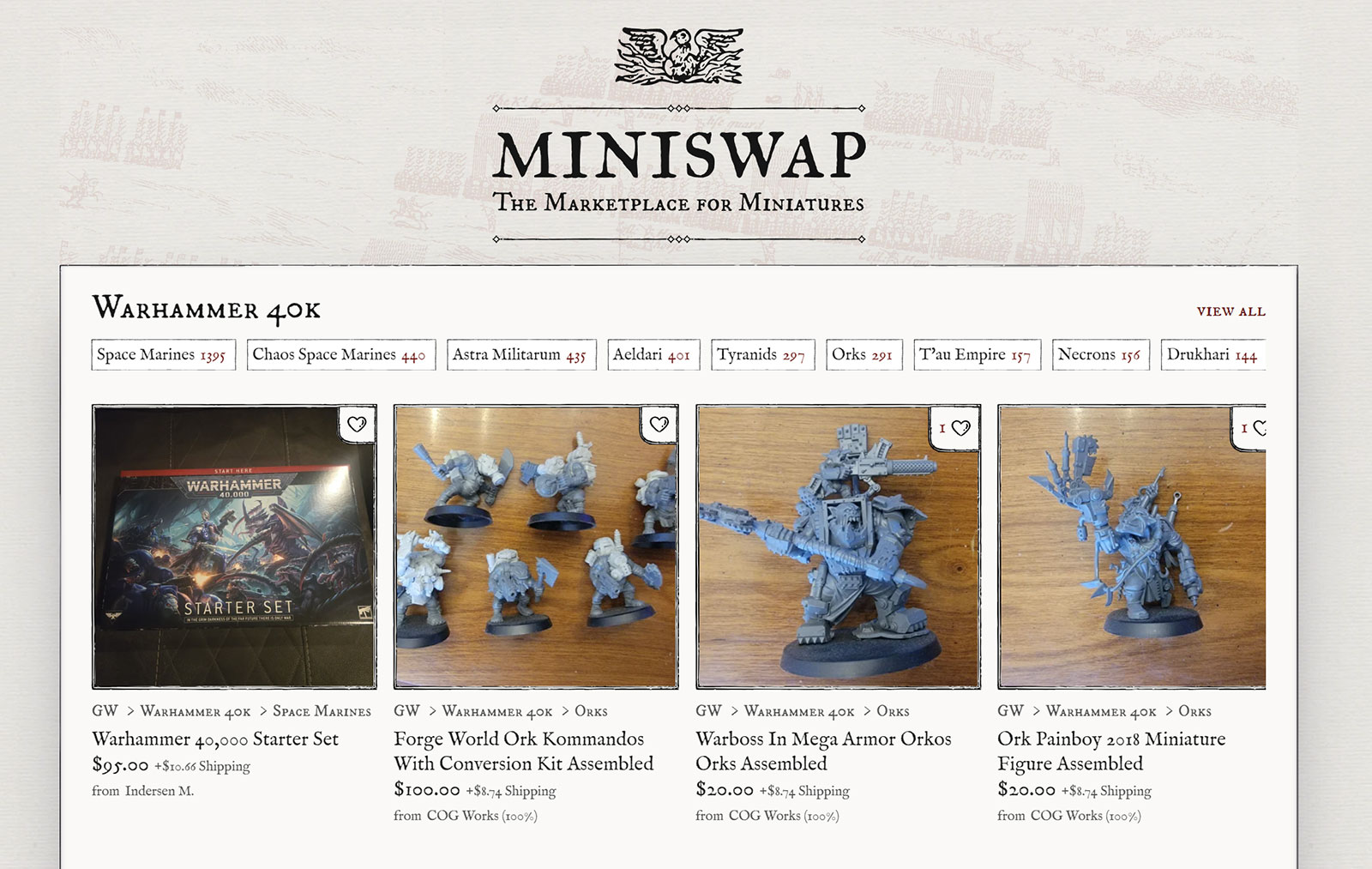
Join more than 10,000 hobbyists in buying and selling on Miniswap:

Tale of Painters is the unofficial Warhammer hobby magazine run by hobbyists like you. Support our work by using the affiliate links from our 🇺🇸 / 🇨🇦 partner stores for your next orders so we can continue to bring you fantastic FREE content every day:




Or support us directly:
