


Few things in Warhammer 40k capture the imagination quite like a Dreadnought. Part tomb, part tank, it’s one of those designs that somehow gets more compelling the more you learn about it. In this post, I’m celebrating the Dreadnought in all its forms, from the chunky, nostalgic charm of the classic sculpt to the modern Redemptor, and sharing some thoughts (and a hot take or two) on why these walking coffins have earned their place as one of 40k’s most iconic designs.
There’s something universally cool about a towering suit of armour striding across a battlefield. Whether it’s Iron Man’s suit, the AMP suits in Avatar, or the iconic Gundam mobile suits, we sci-fi fans have always been drawn to the idea of a human piloting a massive, unstoppable machine. I would like to share some of my painted Dreadnoughts and thoughts with you on them below.

Perhaps it’s the fantasy of amplified power, the idea that a fragile human can step into a shell of ceramite, steel, or some sort of alien alloy and suddenly become a walking tank, surviving in any hostile environment.
Warhammer 40k takes this fantasy and twists it into something darker, more tragic, and uniquely grimdark, and nowhere in this setting is that clearer than in the evolution of the Space Marine Dreadnought.
The classic “Castraferrum” Dreadnought: pure 40k nostalgia
The old-school Space Marine Dreadnought is pure 40k nostalgia. Chunky. Brutal. Iconic. Talking of brutal, I’m old enough to remember Dreadnoughts cast in metal! I seem to recall a mate’s little brother losing a game (and the plot) when we were much younger and throwing this metal Dreadnought “missile” at his opponent! LOL 😉

Although this sounds “funny” and even alien to younger hobbyists who grew up with and only know plastic models, rest assured, having a metal old-school Dread thrown at you is not fun! To clarify for you greybeards out there, it remained intact after impacting in true unstoppable Dreadnought form!
For many hobbyists (including me), the classic design has qualities and a charm that modern kits can’t fully replicate. The little Dread has a clean simple silhouette, a walking sarcophagus with guns bolted on. It has pure Rogue Trader DNA with hints of early mecha design from Battletech, and 80s sci-fi movies and comics. Its characterful proportions are squat and purposeful. Best of all, it screams narrative and is the perfect visual metaphor for a dying hero entombed in a walking coffin. “Only in death does duty end!”


Ultramarines & Death Company Dreadnoughts by Stahly, Venerable Dark Angels Dreadnought by Garfy
Painting them is fun, flat panels, crisp edges, cool guns, and that distinctly dark “armoured reliquary” aesthetic. These are powerful ancient machines dragged from the Chapter vaults in the darkest of times to smash face one last time.
But as we all know, Warhammer evolves (too fast, in my view, we can discuss that in another article perhaps?) and for me, the Redemptor Dreadnought didn’t just update the design, it levelled it up, BIG TIME!
Enter the Redemptor: a design that levelled up
My hot take: the Redemptor Dreadnought is better than the old-school Dreadnought. Before you reach for your old-school metal Dread to throw at me LOL 😉 hear me out! The Redemptor Dreadnought is, simply put, a fantastic bit of modern GW design. I had to add one to my Ultramarines collection, and I chose the Brutalis pattern.


Here’s why I think it surpasses the classic Dreadnought while still respecting its roots:
- A more believable mecha silhouette. The Redemptor looks like it could actually walk, pivot, and fight. The joints make sense. The armour plates articulate. The proportions feel functional rather than just symbolic. For me, it’s closer to the grounded realism of robotics while still retaining the imposing, primitive gothic bulk of 40k.
- Better poses and easier articulation. This kit is way better for the hobbyist all round. The old Dreadnought was basically a brick with fists. With a little effort, the Redemptor kit can stride, brace, aim, and punch. It feels dynamic in the hand and on the tabletop.
- Scale. With better proportions, the Dreadnought feels more powerful and looks great alongside the larger models in the 40k range today.
- Details. In my opinion, this is what makes this kit shine so much. Every panel, vent, rivet, and servo tells a story. You can really push your hobby skills and enjoy painting things like heat-scorched exhausts, glowing reactor cores, and battle-worn plating. You can even choose to paint the entombed warrior’s coffin and have it showing defiantly to your enemies or protected ready to wade into battle. What’s not great about that?
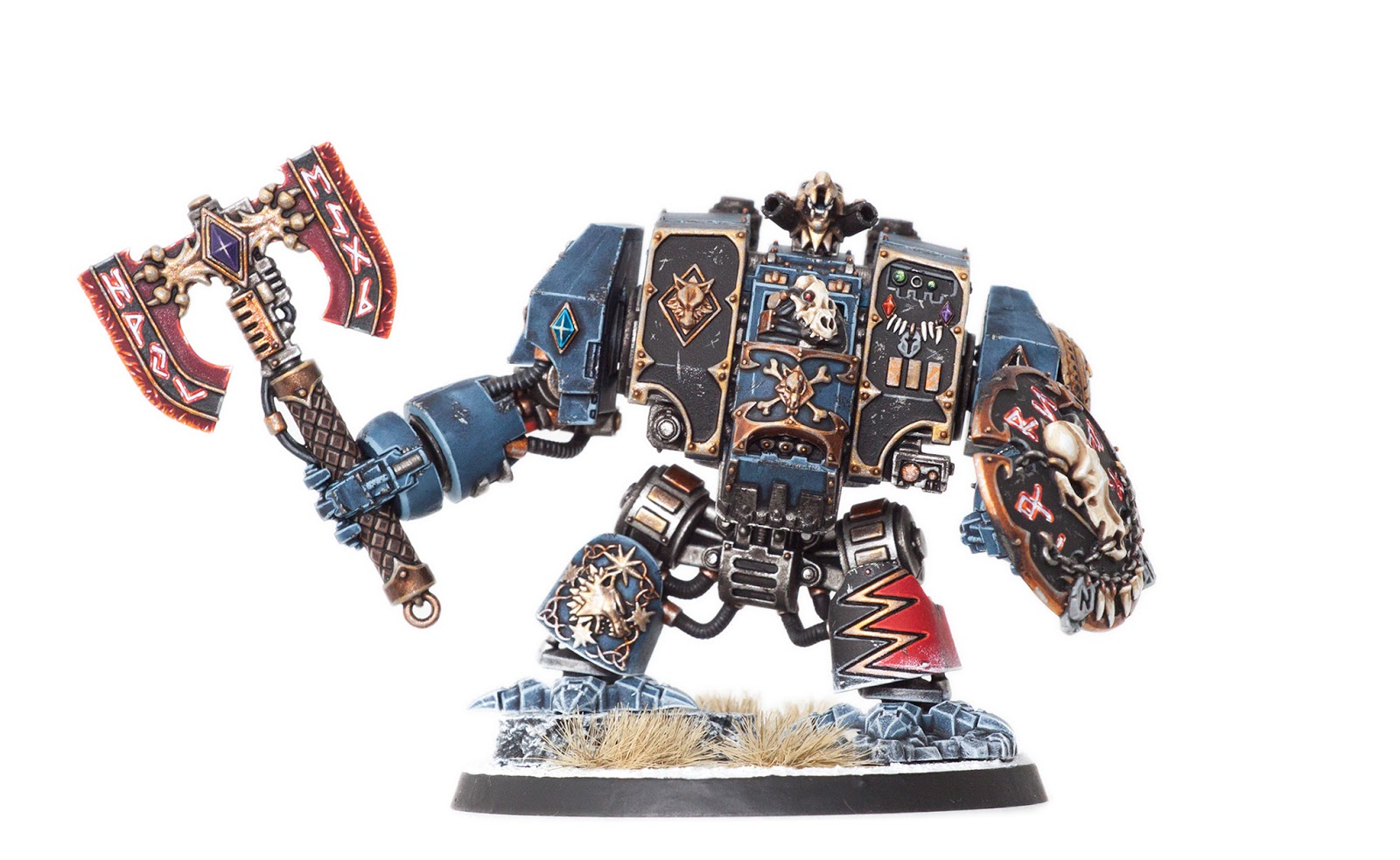
Regardless of whether you agree with me or not, I’m sure we can all agree Dreadnoughts are AWESOME and so much fun to have in one’s collection. Here are some brilliantly painted Redemptor chassis Dreadnoughts from our collection:

What are your thoughts, think I’m wrong? Feel free to share your views in the comments section below 🙂

I’m firmly in team Castraferrum… and Contemptors!
BOOOOOO>>>>>>> LOL 😿😹🐱…. But I have to agree they are amwesome.
lovely article. However you don’t see to have a picture of the Furibundus dreadnought. the grandaddy of them all! it’s a shame I can’t post a picture to correct this!
Thanks Paul Maybe you can pop it in the Discord for us?! thanks for the comment! 😉