


We’re going on a journey through time, ranking every 40k starter and launch set! With pre-orders for Armageddon just around the corner, we thought it was the perfect moment to pause and look back at everything that came before. We’ll tell you where we think Armageddon stands compared to all the previous 40k starter and launch sets, share our favourite starter sets from nearly 40 years of Warhammer, and show you our collections of lovingly painted starter set miniatures.
Warhammer 40.000: Armageddon will be available for pre-order starting now, Saturday, 6 June 2026. The pre-order period lasts two weeks, with the official release date set for 20 June 2026. The RRP is £185 / 240 € / $295.
Warhammer launch boxes are a temporary product, available only while stocks last. For the last few launch boxes, availability was good, but I have heard from my partners that there will be fewer boxes of Armageddon in circulation than Leviathan, and smaller shops are already sold out in some cases.
The great retrospective: ranking every Warhammer 40,000 starter and launch set
We can’t bring you an Armageddon unboxing just yet, so we’ve done something else instead: a grand journey through every Warhammer 40,000 starter set across every edition, complete with our personal collections and thoughts on each. And yes, Armageddon included. Here’s the ranking (careful, there might be some hot takes).
10th place: 7th Edition – Dark Vengeance Mk. II (2014)
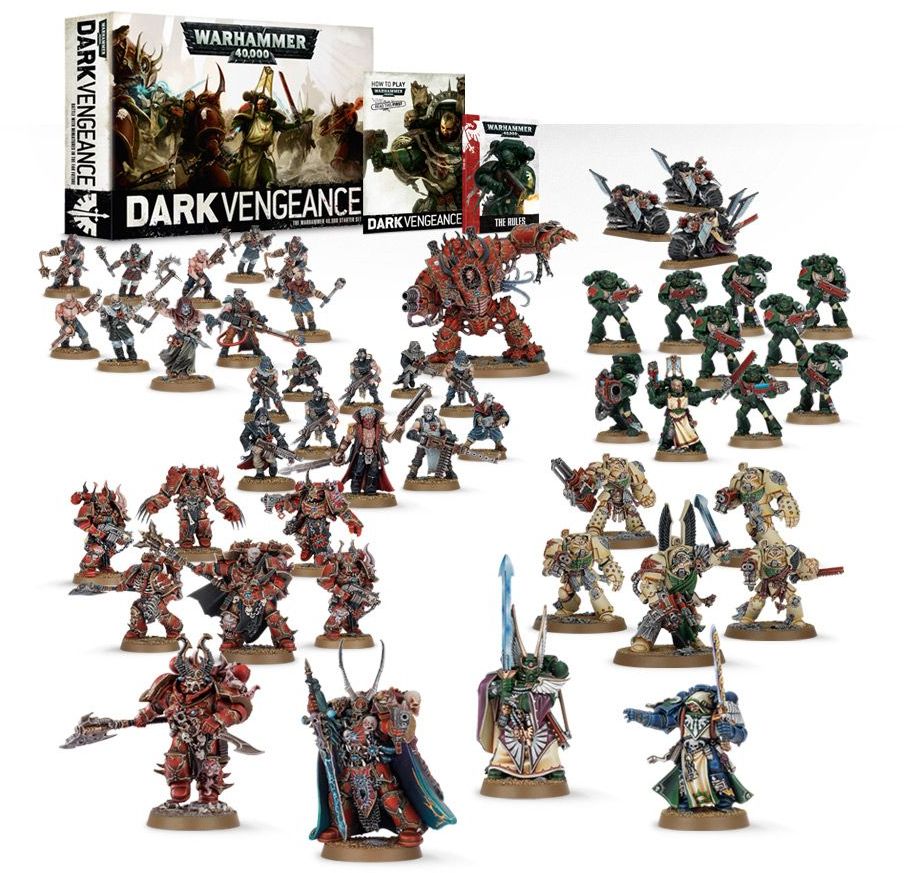
I genuinely debated whether this deserves its own entry. Dark Vengeance was originally the 6th Edition starter set (Chaos Space Marines versus Dark Angels) but for the 7th Edition it was re-released with the exact same miniatures and an updated rulebook, which rather neatly summed up the 7th Edition’s reputation as a clean-up of 6th Edition affair. To complete the picture, some of the old Assault on Black Reach miniatures also resurfaced in the budget “Battle for Vedros” set around the same time. Recycling at its finest.
9th place: 2nd Edition Starter Set (1993)

And straight into hot take territory. Look, I have plenty of nostalgia for the 2nd Edition, but if we’re being honest, the starter set was a bit of a disaster. 80 minis still sounds impressive today, but those eighty miniatures came in just six different sculpts. 20 identical Orks and 40 (!) identical Gretchins were overkill even by the standards of 40K games at the time. The Warhammer Fantasy starter sets of the same era managed far more sensible and varied contents on comparable budgets.
To make things worse, this was an era when you couldn’t buy rulebooks separately. Every 40K player needed this box for the game components, which meant everyone ended up sitting on a mountain of identical Orks and Gretchins with absolutely no idea what to do with them. A personal note: at thirteen years old, I saved up for the better part of nine months for this box, no small feat on pocket money. Back then, there was no internet rumour mill, so when I finally got my hands on it, the 3rd Edition arrived just a few months later and my shiny new box was immediately obsolete. The hobby giveth, and the hobby taketh away…

The nostalgia is strong regardless. Garfy fulfilled a long-held dream a few years back, tracked down a complete box, and painted the whole thing. His retro review is here, and more pictures of the fully painted box (yes, all sixty Orks and Gretchins) are here.
8th place: 4th Edition – Battle for Macragge (2004)

After the excellent 3rd Edition starter set, Battle for Macragge was one step forward and one step back. The price came down noticeably for a similar model count, but everything was monopose push-fit. The rulebook shrank to a small-format softcover accompanied by a beginner’s booklet, and the grand hardback was nowhere to be seen. The goal was to make 40k more accessible to newcomers, and on those terms it succeeded. The crashed Aquila shuttle terrain also still looks great today, which is more than can be said for some of the Marines.
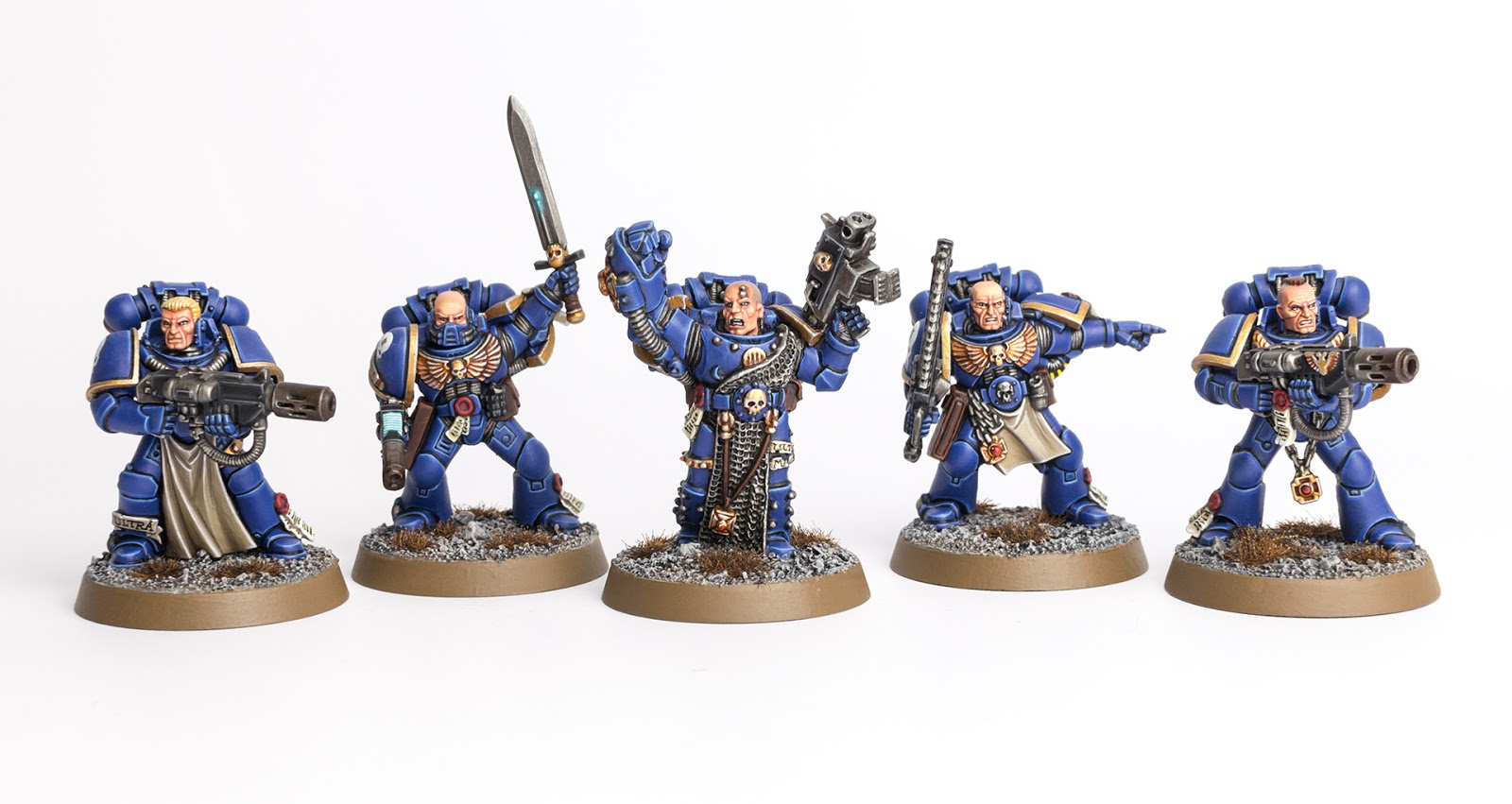
The Sergeant from Battle for Macragge still has a place in my Firstborn Ultramarines army, as a Company Veteran. However, I have replaced the chainsword with a power sword.
7th place: 3rd Edition Starter Set (1998)

The 3rd Edition of Warhammer 40,000 was a turning point in almost every sense. A completely new rules architecture that laid the foundations for modern 40K. A grimdarker aesthetic across the board: more desaturated paint jobs, gothier publications, less of the colourful comic book energy that defined the early years.
The 3rd Edition starter set reflected this shift and was a genuine upgrade: cardboard gave way to plastic ruins, palm trees, and accessories. The model count looks modest by today’s standards, but the included Marines were their first proper multipart plastic kits, and the Land Speeder set the template for Space Marine vehicle design for the next two decades. Less can be said for the Dark Eldar. Introduced as a new faction with this edition but developed without Aeldari mastermind Jes Goodwin, their designs received a decidedly mixed reception at the time, and history has not been especially kind to them since.
6th place: 6th Edition – Dark Vengeance (2012)

Dark Vengeance, the 6th Edition starter set that was later recycled for the 7th (see position 10), was a careful evolution of the formula established by Assault on Black Reach. Two push-fit armies, Chaos Space Marines versus Space Marines, with one twist: for the first time, the box committed to a specific Chapter rather than generic blue boys. The Dark Angels. This sure limited the appeal at the time, and Games Workshop quietly dropped the approach for all future starter sets.
The trade-off was thematic models like Ravenwing Bikers and Deathwing Terminators, and the Dark Angels character sculpts genuinely hold up beautifully today. On the other side of the table, the Chaos Space Marines received the refined design language they still carry now, with new additions like the Helbrute, Cultists, and the first plastic Chosen (a little small by modern standards thanks to scale creep, but characterful sculpts nonetheless).

Dark Vengeance was the spark that led Garfy to start both his Dark Angels and Black Legion armies. He painted the entire box, have a look at this post.
5th place: 11th Edition – Armageddon (2026)

Armageddon is the new launch box for the 11th Edition, going up for pre-order this weekend. The pre-release buzz felt somewhat quieter than for previous editions, which is a little surprising given that Armageddon as a setting is about as iconic as Warhammer 40,000 gets.
Part of that is probably down to the Space Marine side of the box, which doesn’t offer much that’s genuinely new. For newcomers, though, the Marines offer a well-rounded introduction to Astartes warfare in all its forms. The character model designs are exceptional – the Captain and Chaplain in particular – and the Land Speeder redesign triggers warm 3rd Edition memories in the best possible way. The Orks, however, are beyond reproach. Just as Indomitus elevated the Necron range and Leviathan pushed the Tyranids forward, Armageddon marks a clear step change for Ork models. The musculature, build, and poses of the Ork Boyz and characters are more life-like than anything that came before, the Wartrakk looks brilliant, and the Big Mek Dakkarig is an entirely new unit to boot.
Where Armageddon falls short, for me, is in what it isn’t. The Skaventide launch box for Age of Sigmar, released only a few years prior (our review here), matched Armageddon for model count and also included Spearhead as a fully standalone game mode complete with a gaming board and terrain. None of that is present in Armageddon, and its 40k equivalent Combat Patrol doesn’t appear to have received any meaningful evolution. All of this at a price point that edges close to the Horus Heresy Saturnine box. That takes some of the shine off. Nonetheless, we have plenty of exciting content planned for the new edition launch in the coming weeks, so check back often.
We would be delighted if you would support Tale of Painters by using our affiliate links when purchasing Armageddon. Thank you so much!
4th place: 8th Edition – Dark Imperium (2017)
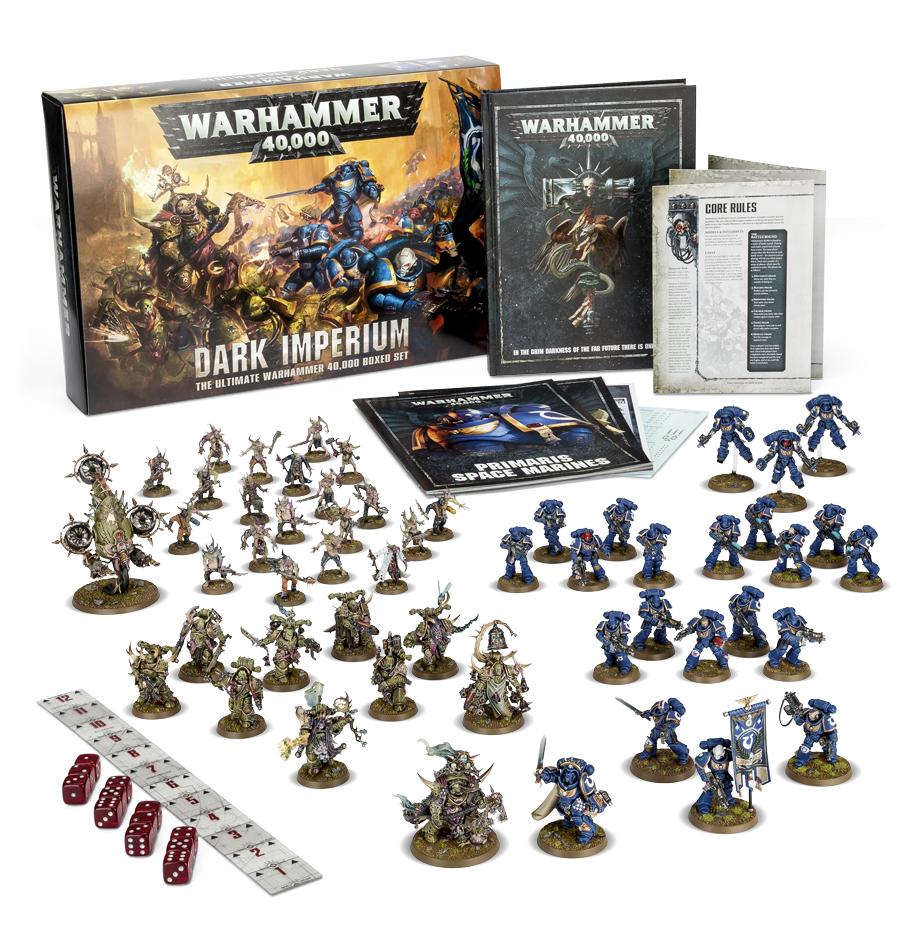
The 8th Edition brought another complete rewrite of the rules architecture, streamlining the game significantly. The lore moved forward in a more meaningful way than ever before, and the Primaris Space Marines arrived in the 41st millennium (to much debate). At the time it felt like a genuine new beginning, and that sense of momentum carries Dark Imperium high in this ranking. We saw Intercessors in Mk. X armour, Gravis armour, and much more for the very first time. That kind of landmark moment sticks. The Death Guard on the opposing side also received an entirely new model range with this box, and the Lord of Contagion in Terminator Armour remains an outstanding sculpt to this day. Both factions were hugely popular. Dark Imperium calling itself “The Ultimate Warhammer 40,000 Boxed Set” was not entirely without justification.
The 8th Edition also introduced a tiered starter set range, with “Know No Fear” and “First Strike” offering more accessible entry points at lower price points.
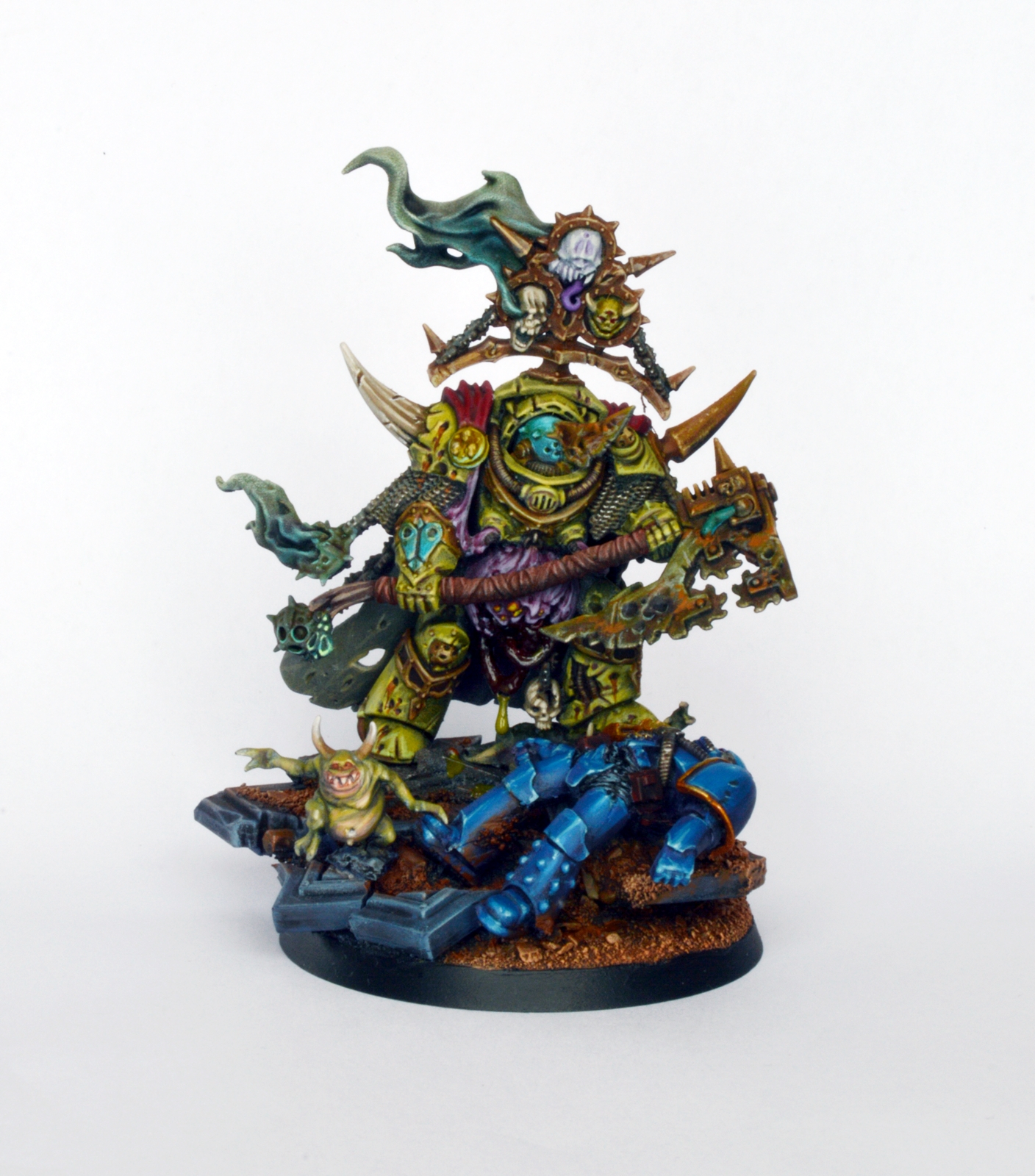


The Death Guard proved very popular with the painters on Tale of Painters; among others, Sigur painted the entire contents of Dark Imperium, while Banzai1000 took care of the Lord of Contagion. Garfy also painted some of the models as Ultramarines.
3rd place: 10th Edition – Leviathan (2023)

Leviathan continued the launch box formula established by Indomitus and followed by tiered starter sets, substituting Necrons for Tyranids as the Space Marines’ opponents. Its greatest strength is sheer scale, particularly in centrepiece models: the Tyranids alone brought three of them, including a reimagining of the iconic Screamer Killer Carnifex, and the Space Marines finally got a Dreadnought back in a starter box. The updated Terminators were equally fantastic and gave many veteran players a compelling reason to pick this up regardless of which chapter they collected. As with the Necrons before them, Leviathan marked the beginning of a new generation of Tyranid models: sharper details, refined proportions, new Termagants, and entirely new bioforms like the Von Ryan’s Leapers and Neurogants.
Check out our detailed Leviathan review here and take yourself back to the heady days of 2023.

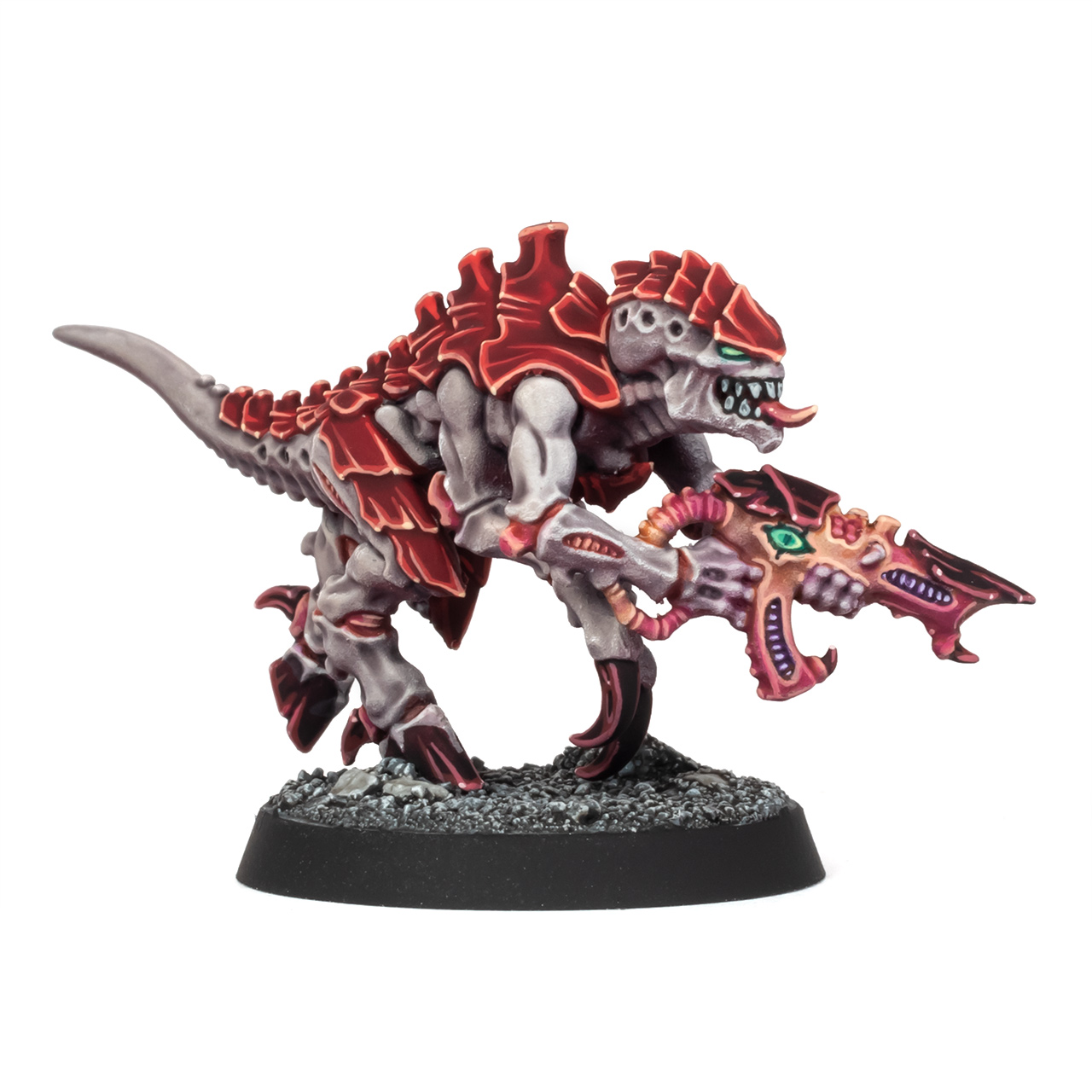
2nd place: 5th Edition – Assault on Black Reach (2008)

Assault on Black Reach was a genuine jaw-dropper at the time. In the same way Dark Imperium later reshaped expectations before Indomitus went even further, Assault on Black Reach redefined what a Games Workshop starter set could look like: forty-six models was huge compared to the modest skirmish-scale offerings that came before. For the first time, a 40k starter actually felt like two small armies rather than a handful of models for a demo game. Unique character sculpts appeared in a starter box for the first time: a Captain that still looks great, and a Warboss on the Ork side. There was even a Dreadnought, albeit a significantly simplified push-fit version. And Deffkoptas! Assault on Black Reach also carried forward some of the better ideas from Battle for Macragge, like a beginner’s booklet and a compact pocket rulebook. A thoroughly well-rounded set, and still one of my personal favourites.
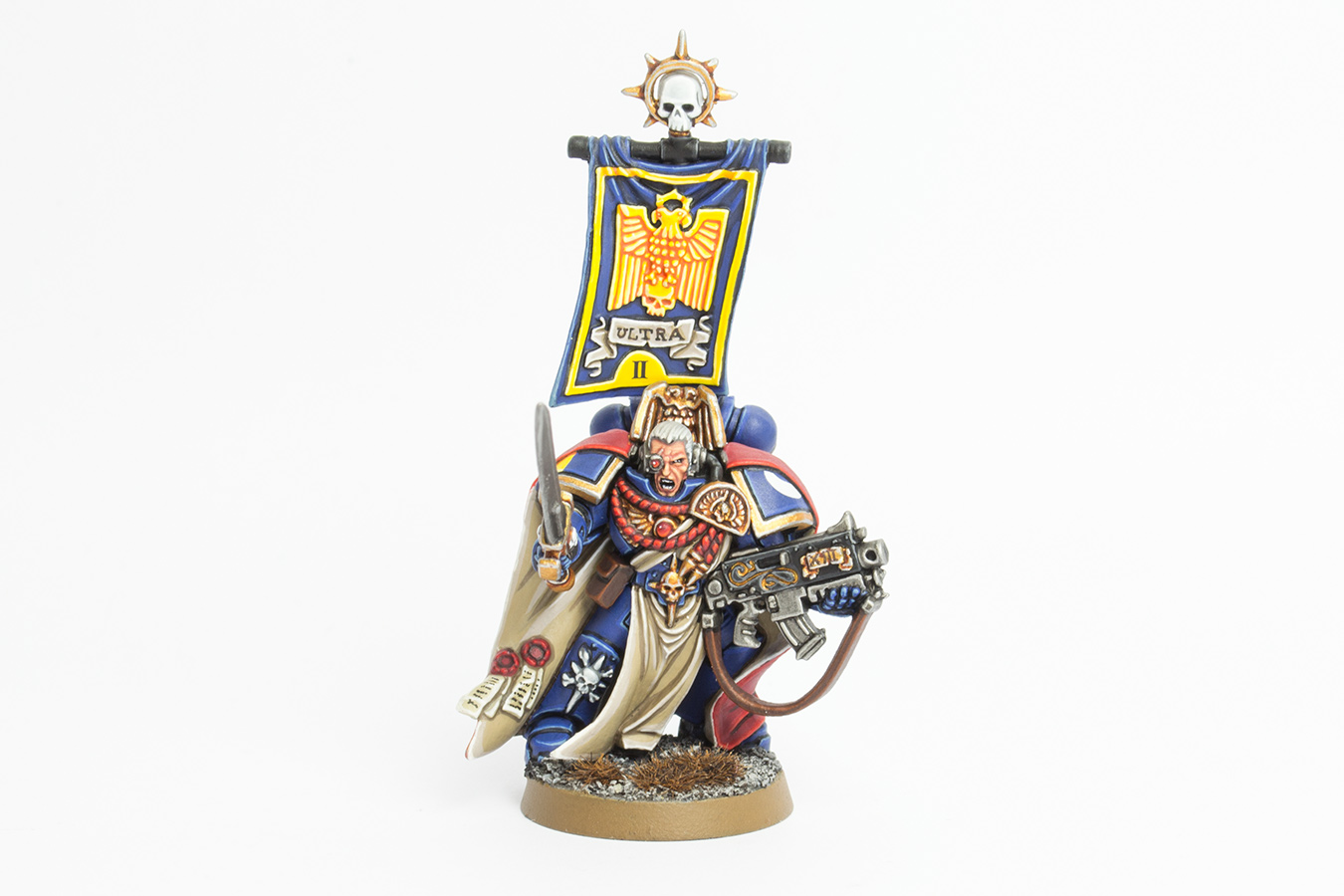
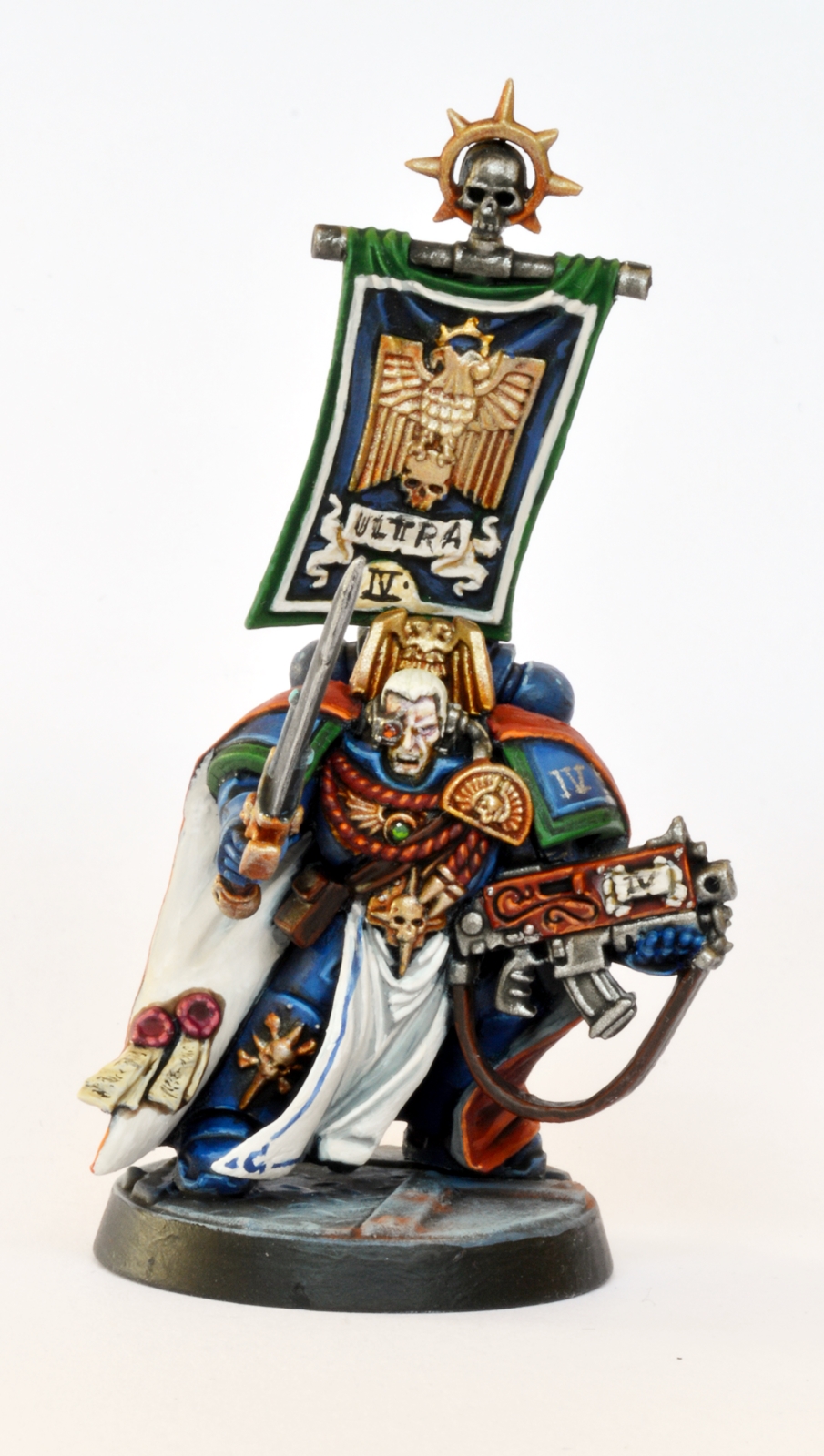
Some of those push-fit Marines remain quietly embedded in my Tactical Squads to this day, and the Captain has long since been painted and given a place of honour. The Captain was sure a popular sculpt back then, and Banzai1000 painted him as Captain Idaeus of the Ultramarines’ 4th Company.
1st place: 9th Edition – Indomitus (2020)

Drum roll… it was a close call between Leviathan and Indomitus, but Indomitus takes the top spot. With this box, Games Workshop launched something genuinely new: a launch box aimed squarely at veterans rather than newcomers, at an attractive price that felt almost generous by GW standards. And the contents were enormous. A substantial step up from Dark Imperium in almost every respect.
On the Space Marine side, almost everything was new: the gothic Bladeguard with their heavy shields, Assault Intercessors, Outriders, and the Judiciar, forming a well-themed close-combat collection. As it was almost always the case, though, the Xenos faction impressed me most. Every single Necron model was new, and the range took a significant leap forward. Instead of smooth Necrodermis, the sculpts were covered in small details, wear, and battle damage that added real depth and character. Entirely new units arrived too, like the Skorpekh Destroyers and the Canoptek Reanimator.
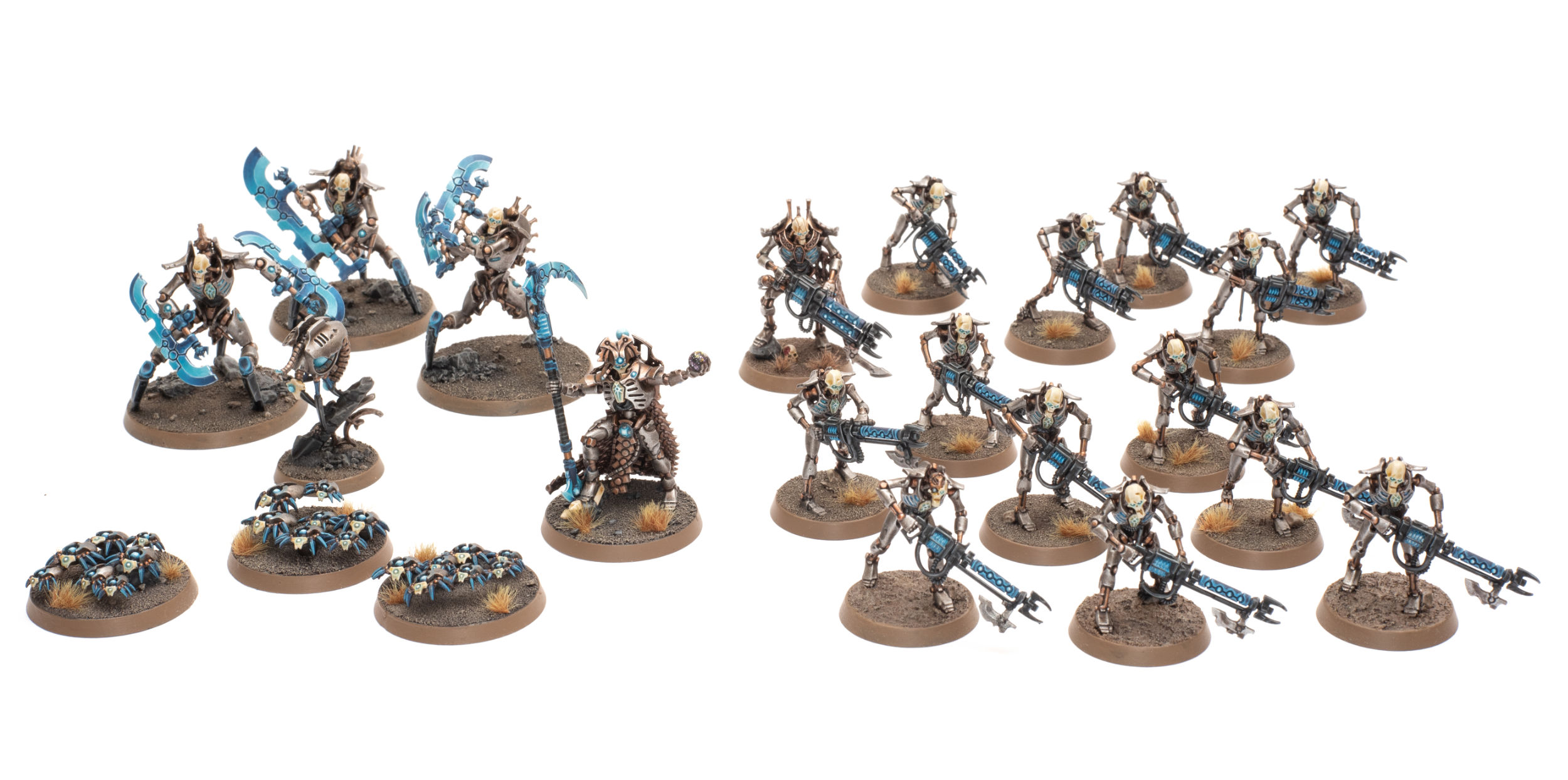

Garfy painted many of the Necrons and several of the Space Marines for his Dark Angels army (that was featured in White Dwarf) at the time. And I still have a substantial pile of Indomitus Necrons sitting in my pile of opportunity, patiently waiting for the day I finally expand my Warriors. Patience, apparently, is a virtue.

And that was our grand retrospective through every Warhammer 40,000 starter set. Would you have ranked them differently? What’s your personal favourite? Let us know in the comments.
In the coming weeks, we have exciting Blood Angels and Ork content planned, and we’re hoping to bring you reviews of the new starter sets and the prepainted terrain before long. Set a bookmark and check back regularly. New posts go up multiple times a week here on Tale of Painters, covering all the latest Warhammer releases.
Where to get
You can find the latest GW releases at our 🇬🇧/🇪🇺 partner stores Wayland Games, Element Games, and Firestorm Games, at 🇩🇪 Taschengelddieb and PK-Pro, and at 🇺🇸 Noble Knight Games with a welcome discount of up to 20% over RRP. Using our links helps to support Tale of Painters at no additional cost to you, so thank you very much for using them!

5 Comments
Leave a Reply
Tale of Painters is the unofficial Warhammer hobby magazine run by hobbyists like you. Support our work by using the affiliate links from our 🇺🇸 / 🇨🇦 partner stores for your next orders so we can continue to bring you fantastic FREE content every day:



Or support us directly:



The 3rd edition starter set was my introduction, so that one will always have a place in my heart.
Nice article with many good memories. I think I bought the 3rd edition set, but not sure because some elements remain at my parents at some other not.
On the other side, I would like you to add the years of each edition on the article, it would help the timeline!
Great idea, just added!
lame. nothing surpasses 3rd edition. it is was formed and dictacted the rest of the game. but the game strayed to far, 3rd edition was common sense and not an op players game. it was all about tactics and stategy. ahh 3rd edition, before 40k turned soy. truly it is the classic game before the new owners of gw decided to change the game to place their stamp on the looks and lore. those owners destroyed the game. 3rd edition is the last bastion of actual gameplaying. argue if you,but if you argue,its because you never played it. 3rd edition should be branded on all of your soy foreheads.
so says the 30yrs of 40k playing exp i have. shame on you youngsters, you know not what the grimdark holds.
What a great article. Nice trip down memory lane! I started my hobby journey really at 7th so this was interesting to read your comments. I do remember second edition as a kid but never had the set sadly.
I recon my top 3 are
3. 9th. INDOMITUS….The quality of the minis is first class and a solid all round good value set.
2. 10th LEVIATHAN.
Again, the models are incredible and I have them in my current Ultramarines army which was partly inspired by this set, the fresh animation on Warhammer Tv and Garfys incredible work.
1st place… has to be 8th DARK IMPERIUM. For me this is hands down my fave set. The game was great and the minis in this set really caught my imagination the classic “good vs evil” vibe with solid narrative to them. The set is not just great models, it has lots of great themed ideas within. Furthermore the core rule set was revamped massively here, making the game more enjoyable in the round. Indexes were PEAK fun balanced no B.S 40k rules. No question about it! #fightme in the comments if you disagree 😂
Has to be 8th for me. Plus. How good were Garfys Ultras !!! 🎉🤯🤯🔥